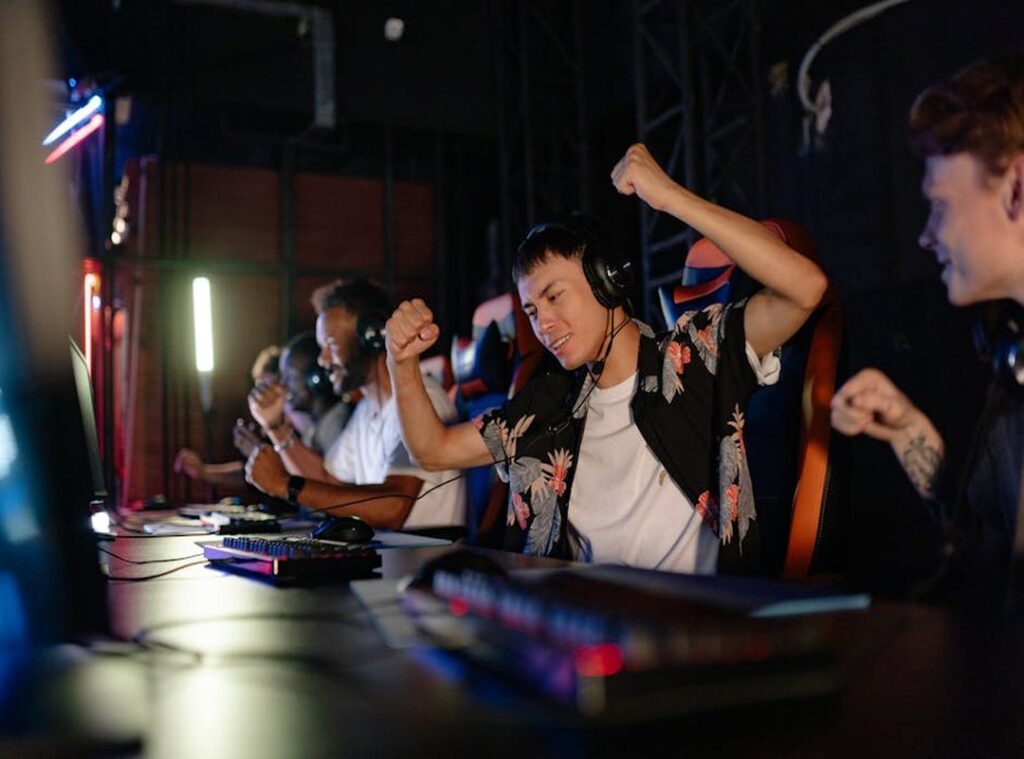

You’ve seen the headlines, right? Multi-million dollar jackpots at esports tournaments like The International or the Fortnite World Cup. Huge numbers but where’s the money coming from?
How does it reach the players? You might be thinking, is it all smoke and mirrors? Nope.
There’s a real system here and I know it well. I’ve followed these esports trends for years. I’ll break it down for you.
Plain and simple.
You’ll get the inside scoop on the mechanics behind these esports prize pools. By the end, you’ll understand where the cash flows from but also how it’s managed and distributed. I’m here to demystify all this for you.
You deserve to know. Ready to dive in?
Unlocking the Mystery: What Are Competitive Gaming Reward Funds?
So, what exactly are competitive gaming reward funds? It’s simple. These funds are the total prize money up for grabs in an esports tournament.
But don’t think it’s just one big check for the winner. It’s a structured pool spread among the top finishers. You might be asking, “How’s that different from player salaries?” Well, salaries come from teams or sponsors, while prize pools are strictly about the tournament loot.
Think of it like the purse in a boxing match or the prize money in the World Series of Poker. That makes more sense, right? What’s surprising is how wildly these funds can vary.
One game’s tournament could have a pool that’s enormous, while another might be more modest. Have you ever wondered why? It’s all about the game’s popularity and the sponsors backing it.
And if you’re into this stuff, you might want to check out some Regional Esports Tournaments To Watch. They often have fascinating ways of distributing their prize money. Plus, who knows?
You might discover the next big thing in esports. Does it make you rethink where the real money in gaming comes from?
Following the Money: Where Esports Cash Comes From
Let’s get real about the engines that drive esports prize pools. It’s not just magic; there’s real money and plan behind it. Curious where the cash flows in from?
So was I.
The Publisher’s Bank
First off, game publishers like Riot Games and Epic Games are pouring cash into prize pools. It’s smart. By investing millions into their games’ prize pools, they fuel marketing and build their community.
Look at Valorant or Fortnite. Big money in these tournaments isn’t just a cash grab. It’s a spotlight on the game itself.
The bigger the prize, the bigger the hype. Who doesn’t want to watch pros battle for life-changing money? It’s a spectacle that sells.
Corporate Sponsorships & Ads
Next, let’s talk brands. Non-gaming brands wedge their logos onto everything from player jerseys to broadcast screens. You’ve got giants like Intel, Red Bull, and Mercedes-Benz bringing in serious dollars.
It’s no joke. The exposure is massive. Want to know why brands care?
Attention. Millions of viewers make for a prime advertising playground. Brands get their name out there while tournaments rake in funding.
Everybody wins (except maybe the losers on the stage).
Crowdfunding & Fans
Want to feel special? You’re part of this too. Crowdfunding allows fans to inflate prize pools with their wallets.
The ‘Battle Pass’ model, popularized by Dota 2’s The International, is a fan-driven engine. Players buy content; part of the spend goes straight to the prize pool. Everyone feels involved.
Fans become stakeholders (kind) of. It’s unique to gaming. Unexpected?
Maybe not. But it’s a game-changer in esports.
Traditional Touch: Media & Merch
Broadcasting rights, merchandise, ticket sales (these) are also cash cows. It’s like traditional sports. Selling rights to platforms like Twitch and YouTube is big business.
Events sell out, and merch flies off the shelves. Want more proof? Just follow the biggest prize pools esports and see how these streams stack up.
It’s a modern twist on classic revenue.
There you go. Understanding these funding sources gives a clearer picture of the esports space. It’s not rocket science, but it’s a fascinating mix of old and new.
From Victory to Payday: How Winnings Are Actually Distributed
So, a team wins $1 million. What happens next? It’s not winner-take-all, trust me.

In the world of esports prize pools, the cash is usually split through tiered payouts. Imagine a $1 million prize pool divided like this: 1st place gets $400k, 2nd place grabs $200k, and the rest trickles down to the top 16.
Now, let’s get real. In team games, the money typically flows to the esports organization first. Why?
We’re talking 50-80%, depending on how good your agent is (or how much use you’ve got).
Because they handle the logistics, contracts, and all that jazz. But here’s where it gets spicy: player contracts. These contracts dictate what percentage of the team’s winnings each player actually receives.
And then there’s the ‘real-world reality’ check. The advertised prize? It’s pre-tax.
So, players must fork over a chunk of their winnings to Uncle Sam. On top of that, the organization takes its cut. Maybe even an agent fee.
It’s like winning big in Vegas, only to watch the house take its share.
But why stop at the basics? If you’re curious about how these trends are shifting, check out Emerging Trends Esports Tournaments. In esports, everything’s in flux, and understanding these trends could give you an edge.
So, what’s the takeaway? Winning $1 million doesn’t mean you’re pocketing $1 million. Between team splits, contracts, and taxes, the payout is a lot more complicated than it seems.
But hey, that’s the game. And who knows? Maybe next time, you’ll be the one walking away with the lion’s share (after taxes, of course).
The Next Level: Trends in Esports Compensation
Esports is evolving fast, and if you blink, you might miss the next big thing. One trend that’s got everyone buzzing? Creator-Led Tournaments. Big-name streamers are breaking out of traditional molds. They’re hosting high-stakes tournaments, bankrolled by sponsors and their massive viewership.
Think of it like the Wild West of gaming. Chaotic, bold, and potentially game-changing. But here’s the thing: will this democratize esports or just shift power to a different elite?
Then there’s the push for sustainability. It’s about time, right? The industry is waking up to the need for healthier systems.
We’re talking better funding for ‘Tier 2’ and amateur scenes. It’s not just about the elite 0.1% anymore. This could be the key to uncovering hidden talent, but I’m not sure how quickly this will catch on.
Does the industry have the patience for long-term growth?
Now, let’s talk money. New revenue models are on the rise. Digital collectibles and fan tokens are becoming more popular.
They’re not just fads. Fans are buying into teams and events directly, potentially boosting future esports prize pools. This could shake things up.
But will it sustain or fade out with the next trend? Hard to say. We’re in uncharted territory here, and that’s what makes it exciting.
Who knows where this will lead?
Cracking the Code of Esports Cash
The massive prize pools in esports can feel like a mystery. But now you have a clear roadmap of how those funds come together and get paid out. Understanding esports prize pools gives you a deeper appreciation for the industry.
Whether you’re a fan, player, or enthusiast, this knowledge is solid. Curious about the next step? Dive into articles on tournament strategies or team dynamics and build on what you’ve learned.
Want to stay ahead in the game? Explore Overdertoza’s other takeaways. Your journey doesn’t stop here.
Keep learning, keep gaming, and see where it takes you.
 Multiplayer Systems & Optimization Specialist
Dale Durstobario has opinions about esports tournament trends. Informed ones, backed by real experience — but opinions nonetheless, and they doesn't try to disguise them as neutral observation. They thinks a lot of what gets written about Esports Tournament Trends, Fundamental Gaming Strategies and Tactics, Game Optimization Cheatsheets is either too cautious to be useful or too confident to be credible, and they's work tends to sit deliberately in the space between those two failure modes.
Reading Dale's pieces, you get the sense of someone who has thought about this stuff seriously and arrived at actual conclusions — not just collected a range of perspectives and declined to pick one. That can be uncomfortable when they lands on something you disagree with. It's also why the writing is worth engaging with. Dale isn't interested in telling people what they want to hear. They is interested in telling them what they actually thinks, with enough reasoning behind it that you can push back if you want to. That kind of intellectual honesty is rarer than it should be.
What Dale is best at is the moment when a familiar topic reveals something unexpected — when the conventional wisdom turns out to be slightly off, or when a small shift in framing changes everything. They finds those moments consistently, which is why they's work tends to generate real discussion rather than just passive agreement.
Multiplayer Systems & Optimization Specialist
Dale Durstobario has opinions about esports tournament trends. Informed ones, backed by real experience — but opinions nonetheless, and they doesn't try to disguise them as neutral observation. They thinks a lot of what gets written about Esports Tournament Trends, Fundamental Gaming Strategies and Tactics, Game Optimization Cheatsheets is either too cautious to be useful or too confident to be credible, and they's work tends to sit deliberately in the space between those two failure modes.
Reading Dale's pieces, you get the sense of someone who has thought about this stuff seriously and arrived at actual conclusions — not just collected a range of perspectives and declined to pick one. That can be uncomfortable when they lands on something you disagree with. It's also why the writing is worth engaging with. Dale isn't interested in telling people what they want to hear. They is interested in telling them what they actually thinks, with enough reasoning behind it that you can push back if you want to. That kind of intellectual honesty is rarer than it should be.
What Dale is best at is the moment when a familiar topic reveals something unexpected — when the conventional wisdom turns out to be slightly off, or when a small shift in framing changes everything. They finds those moments consistently, which is why they's work tends to generate real discussion rather than just passive agreement.