
If you’re searching for a competitive edge in today’s fast-moving gaming landscape, you’re in the right place. This article is built for players who want more than surface-level tips — it’s for those aiming to understand the mechanics, strategies, and esports trends that actually separate casual competitors from elite performers.
We break down the latest developments in multiplayer mapping, meta shifts, and pro-level optimization techniques that are shaping high-stakes matches right now. Whether you’re climbing ranked ladders or studying tournament play, you’ll find a clear, actionable championship esports strategy breakdown designed to sharpen decision-making and execution.
Our insights are grounded in ongoing analysis of competitive gameplay, evolving patch data, and current esports tournament trends. By combining strategic fundamentals with what’s working in today’s pro scene, this guide helps you adapt faster, play smarter, and compete with confidence in any arena.
Deconstructing the Champion’s Playbook
To truly understand the mechanics behind a championship-winning esports strategy, it’s essential to not only analyze player tactics but also explore the foundational elements of the game environment, which is where concepts from our article on Advanced Multiplayer Map Design Principles for Competitive Balance come into play.
Championship teams don’t just react—they orchestrate. This championship esports strategy breakdown explores how elite squads layer preparation, adaptation, and psychological pressure into a single game plan. While analysts debate whether mechanics or macro calls matter more, the truth is murkier (and probably map-dependent).
Core pillars often include:
- Vision and information control (knowing more than the opponent)
- Resource timing and objective trading
- Adaptive shot-calling under stress
Some argue raw talent wins tournaments. Sometimes it does. But more often, coordinated systems outperform solo brilliance. The exact formula isn’t universal, yet structured strategy consistently separates finalists from early exits.
The Grand Plan: Mastering Macro-Level Strategy
Have you ever wondered why some teams always seem one step ahead—even when they’re behind in kills? The answer usually isn’t mechanics. It’s macro.
Defining Your Win Condition
Your win condition (the primary path your team uses to secure victory) must be clear. Are you drafting for early aggression, late-game scaling (growing stronger over time), or objective control? Trying to do all three is like building a character with maxed stats in everything—great in theory, useless in reality. What’s your actual plan when the clock hits 20 minutes?
Resource Management as a Weapon
Gold, experience, cooldowns—these are resources. But denying them? That’s strategy. Elite teams don’t just farm; they starve opponents, forcing uneven fights. According to League of Legends Worlds data (Riot Games, 2023), teams with a 2k gold lead at 15 minutes win over 70% of games. Are you building advantages—or donating them?
- Deny vision
- Secure neutral objectives
- Force rotations
Map Control and Vision Dominance
Vision (information gathered through wards or scouting tools) dictates tempo. If the enemy can’t see, they can’t act. Sound simple? Then why do so many players skip it?
Tempo and Pacing
When should you accelerate—or stall? Recognize power spikes and timing windows. A single championship esports strategy breakdown proves this: pressure peaks win titles.
Winning the Moment: Executing Flawless Micro-Plays
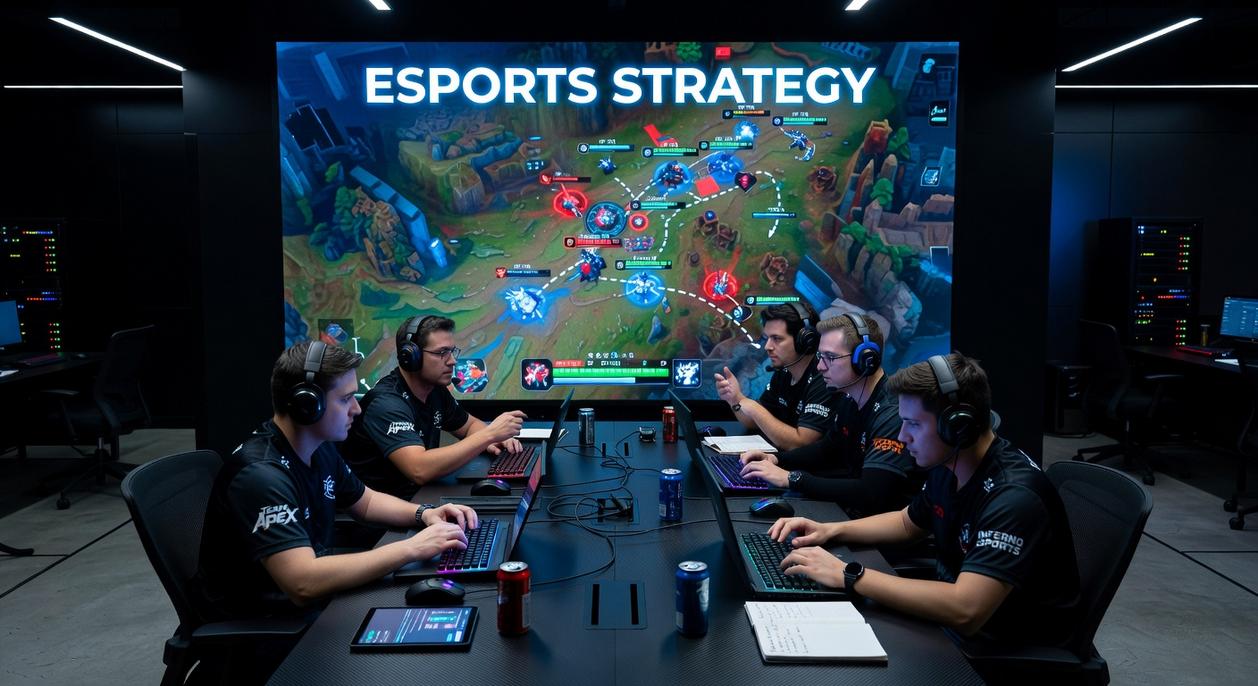
At the highest level, games are decided by 1% optimizations—the tiny efficiencies in every auto-attack, ability cast, and sidestep. Animation canceling (cutting the recovery frames of an action to act sooner) and cooldown tracking (mentally timing when abilities become available) let pros squeeze extra damage into tight windows. Meanwhile, elite positioning means standing where you threaten damage without being punished (think boxing footwork, not button mashing).
Trading Stances Made Practical
Understanding your stance prevents coin-flip fights:
| Stance | When to Use It | Goal |
|---|---|---|
| Aggressive | Enemy cooldowns down |
Force summoners or secure kill |
| Neutral | Even resources | Farm safely, gather info |
| Passive | Outnumbered or low HP | Minimize losses |
Next, apply this in teamfights. In chaotic 5v5s, pros pre-plan target priority and layer crowd control instead of overlapping it. This championship esports strategy breakdown mindset turns chaos into choreography.
To build consistency, drill combos in custom lobbies until they’re automatic. Muscle memory frees mental bandwidth for macro reads—exactly what separates mechanics from decision-making, as explored in mechanical skill vs game iq what separates the pros.
Practice deliberately, review mistakes immediately, and refine one micro habit per session. That’s how moments become wins.
The Art of the Pivot: In-Game Adaptation and Counter-Strategy
Reading the Opponent’s Plan
The first five minutes aren’t chaos—they’re clues. Watch enemy pathing (the route a player takes across the map), early item components, and lane positioning to reverse-engineer intent. If a jungler starts top-side and rushes damage instead of sustain, they’re signaling EARLY AGGRESSION. Some argue it’s impossible to know a strategy that quickly—“It’s all guesswork.” Not quite. Patterns repeat at every rank. In one championship esports strategy breakdown, analysts predicted a bot-lane dive purely from ward timing and wave stacking. That’s not luck. That’s literacy.
Dynamic Objective Prioritization
Your pre-game plan is a hypothesis, not a contract. If you drafted for late scaling but lose early tempo (map pressure and movement priority), contesting the first dragon might be THROWING. Instead:
- Trade for Herald and tower plates.
- Invade opposite jungle camps.
- Secure deep vision for future picks.
Some purists insist every major objective must be contested. But smart teams trade asymmetrically—giving up one asset to gain two elsewhere (think chess, not checkers).
Counter-Picking in the Draft Phase
Counter-picking means selecting characters that directly neutralize enemy strengths. It’s synergy plus sabotage. A mobility-heavy comp into layered crowd control? Risky. Draft to INTERRUPT win conditions, not just amplify your own. (Yes, comfort picks matter—but comfort without context loses games.)
Exploiting Enemy Habits
Players leak information through habits. Over-rotating mid? Poor vision control? Build traps around those flaws. Pro tip: track cooldown discipline—reckless flash usage is a neon sign for repeat ganks. If you need a framework, review a structured breakdown like this one: tactical guide. Adaptation isn’t reactive—it’s calculated pressure applied at the right fracture point.
Beyond the Keyboard: The Psychology of a Champion
Talent wins highlights. Composure wins championships. In esports, tilt (an emotional state where frustration harms decision-making) is the silent match-thrower. To stay tilt-proof, reset immediately after a lost fight: unclench your hands, take one slow breath, and state the next objective out loud. It sounds simple (almost too simple), but cognitive reset techniques are widely used in traditional sports psychology (American Psychological Association).
Communication is another misunderstood skill. Not all talking is helpful. Replace noise with:
- Clear objective calls
- Cooldown timers
- Immediate threats
- Final decision confirmation
That’s it. No monologues.
Trust fuels synergy. When teammates believe calls will be followed, hesitation disappears. Think of it like a championship esports strategy breakdown—every role defined, no ego battles.
Finally, review VODs for decisions, not just missed shots. Ask: Was the rotation late? Was the risk necessary? Mechanics fail. Systems collapse. Champions fix systems.
Integrating the Layers: Building Your Championship Blueprint
A true title-winning system isn’t a single flashy play; it’s the integration of macro planning, precise mechanics, and adaptive decision-making. Think of it as a championship esports strategy breakdown: draft theory, map control timers, economy tracking, and comms protocols all synced. Feature set matters because each layer delivers benefits—macro clarity prevents wasted rotations, micro consistency secures trades, and real-time adaptation punishes overextensions. Your blueprint should map win conditions to specific in-game triggers, like objective spawn windows or power spikes. Apply one pillar during your next VOD review and measure the control it creates.
Level Up With a Championship Mindset
You came here looking for clarity on how to sharpen your competitive edge—and now you have the blueprint. From smarter multiplayer mapping to tighter mechanical optimization and a championship esports strategy breakdown, you’ve seen what separates casual play from calculated dominance.
The real frustration isn’t losing. It’s knowing you could be better but not having the structure to improve. Falling short in ranked. Getting out-rotated in late game. Missing the small optimizations that pros never overlook. That gap is what holds most players back.
Now you know how to close it.
The next move is simple: put these strategies into action. Review your gameplay, apply one adjustment at a time, and study elite-level decision-making until it becomes instinct. Don’t just play more—practice smarter.
If you’re serious about climbing, refining your mechanics, and staying ahead of evolving esports trends, dive deeper into our advanced guides and pro-level breakdowns. Thousands of competitive players rely on our proven insights to sharpen their edge.
Stop hovering at the same rank. Start building a system that wins. Your next match is your opportunity—make it count.