

Esports is evolving faster than ever, and staying competitive means understanding more than just gameplay mechanics. Whether you’re looking to sharpen your skills, follow emerging esports trends, or keep up with hot topics shaping the gaming industry, this article is designed to give you clear, actionable insights. From multiplayer mapping strategies to pro-level optimization tips, we break down what actually impacts performance and long-term success.
One of the biggest shifts in the competitive scene is women in esports growth, which is reshaping team dynamics, tournament visibility, and community engagement worldwide. We analyze these developments alongside core gameplay fundamentals and strategic innovations so you can see the full picture.
Our insights are built on in-depth industry research, trend tracking across major tournaments, and analysis of competitive play patterns. If you want practical knowledge that connects strategy, performance, and the future of esports, you’re in the right place.
Beyond the Hype
Women now make up nearly 46% of global gamers, yet less than 10% of professional esports competitors are female, according to Newzoo and Esports Charts. That gap tells a story.
For years, toxicity, limited mentorship, and few visible pathways slowed progress. However, the landscape is shifting. Structured leagues, scholarship programs, and creator-driven tournaments are building real pipelines. Meanwhile, brands are investing in inclusive rosters because diverse teams expand audience reach and sponsorship value.
This breakdown of women in esports growth shows you where momentum is real—and how to plug in. You’ll discover emerging platforms, community-backed scrims, and grassroots circuits that lower barriers to entry. In turn, that means clearer progression routes, stronger networking, and better odds of turning skill into sustainable competition right now today.
The Foundation: How Scholastic and Collegiate Programs Are Changing the Game
For years, competitive gaming lacked a true farm system—a structured development pipeline (think Minor League Baseball, but for esports). Critics argue talent should “just grind ranked” and get noticed organically. But that approach ignores access gaps, mentorship shortages, and safety concerns that disproportionately affect marginalized players.
The Pipeline Problem
Traditional esports scouting favored visibility over development. Without formal coaching, clear codes of conduct, or recruitment standards, many promising competitors stalled out. Scholastic programs are changing that by creating regulated environments with eligibility rules, academic benchmarks, and staff oversight. (Turns out structure isn’t the enemy of creativity.)
Grassroots Growth
High school leagues and collegiate clubs now offer dedicated scholarships and women-focused tournaments, directly addressing barriers tied to women in esports growth. These programs define inclusive recruitment—actively sourcing players from underrepresented groups instead of waiting for them to apply. Pro tip: Schools that pair scholarships with mentorship retain players at significantly higher rates (NACE, 2023).
Case Study: UC Irvine Esports
UC Irvine built one of the first varsity esports arenas in North America. Their recruitment blends open tryouts with targeted outreach to affinity gaming groups. They back this with mental performance coaching, anti-harassment policies, and academic tutoring. The result? Diverse rosters competing consistently at national levels.
Impact Analysis
Opponents say collegiate play slows pro ambition. Evidence suggests the opposite: structured competition sharpens communication, strategy, and brand literacy—skills orgs actively scout (Newzoo, 2024). These programs don’t replace the pro ladder; they stabilize it, creating safer, clearer pathways to semi-pro and professional careers.
Building a Better Arena: The Rise of Inclusive Leagues and Safe Spaces
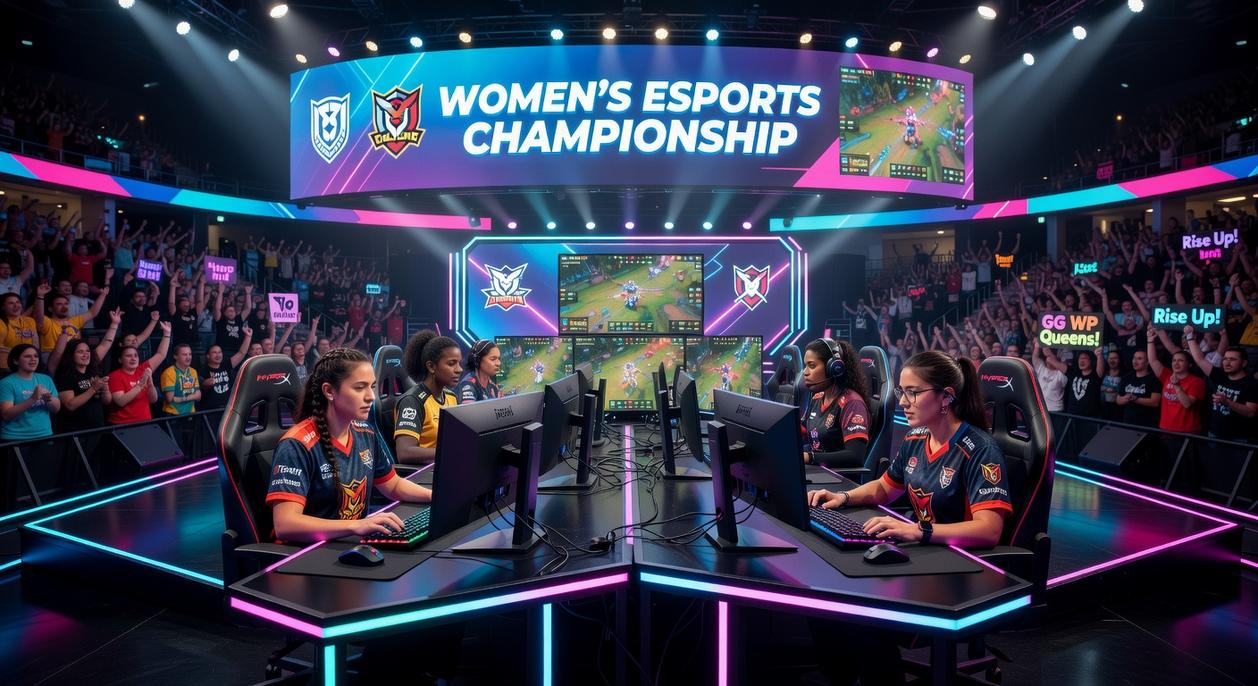
In traditional ranked ladders, competition can feel like learning to swim in a stormy ocean. You’re not just fighting waves—you’re dodging sharks. Female-only and female-forward tournaments act more like controlled training pools: still competitive, still demanding, but structured for growth rather than survival. Dedicated competitive spaces give rising players room to sharpen mechanics, shot-calling, and confidence without the constant drag of harassment that often defines open queues.
This model has become a cornerstone of women in esports growth. Critics sometimes argue that separate leagues create unnecessary divisions. If skill is skill, shouldn’t everyone just compete together? In theory, yes. In practice, development pipelines matter. Just as the WNBA doesn’t diminish the NBA, inclusive leagues expand the talent ecosystem (and give scouts more places to look).
Spotlight on VCT Game Changers
Riot’s VCT Game Changers for Valorant is the clearest proof of concept. Structured with regional series feeding into an international championship, it features substantial prize pools and six-figure global events. Viewership has climbed into the hundreds of thousands during championship broadcasts, demonstrating clear demand (Riot Games Esports data). The league has elevated stars like meL and florescent, proving the circuit is more than symbolic—it’s a launchpad.
And this isn’t isolated. ESL Impact League in CS:GO mirrors the model with LAN finals and consistent seasonal play, reinforcing that this is an industry-wide shift.
These leagues function like high-performance gyms. Players gain stage reps, refine team chemistry, and attract sponsors in a visible, high-stakes setting. Understanding how streaming platforms amplify these moments is crucial—see how streaming platforms influence tournament viewership.
Pro tip: treat these circuits as scouting grounds. Today’s Game Changers MVP could be tomorrow’s international headline.
The Creator Pathway: How Streaming and Content Creation Fuel Pro Aspirations
For years, “going pro” meant grinding ranked ladders, chasing scrims, and hoping for a contract. But in hubs like Los Angeles, Seoul, and Berlin—where org houses and bootcamps are common—the definition is shifting. Redefining “Pro” now includes building a sustainable streaming brand that rivals (and often exceeds) tournament winnings.
Some critics argue streaming is a distraction from serious competition. They say split focus weakens mechanics and macro play. Fair point—solo queue doesn’t win championships. But here’s the counter: consistent content builds leverage. A creator with 50,000 Twitch followers negotiating with an org has more bargaining power than a ladder grinder with none (visibility pays bills).
That’s why women in esports growth matters here. Popular female streamers demystify high-ELO play, explain patch notes, and host community scrims that feel less intimidating than open qualifiers. Visibility becomes viability.
The hybrid athlete/creator model is now standard:
- Stream ranked sessions with live comms to showcase game sense and shot-calling.
- Upload VOD reviews on YouTube breaking down rotations, economy management, or map control.
- Engage Discord communities to run viewer customs and build loyalty.
Pros across Valorant and League leverage Twitch drops, sponsor overlays, and affiliate codes to supplement prize pools (because even deep runs don’t guarantee stability).
Aspiring players can follow suit. Pro tip: clip your best tournament moments with clean HUD, clear comms, and concise captions—scouts don’t have time to scrub through four-hour VODs. Show skill, yes, but also personality and consistency. In today’s esports ecosystem, the pathway isn’t either/or. It’s both joystick and camera.
The momentum is no accident. It’s the result of structural shifts: stronger educational pipelines that turn campus clubs into career launchpads, dedicated pro leagues that guarantee visibility, and a creator economy that rewards voice as much as mechanics. Together, these forces are reshaping the competitive landscape.
More importantly, they work because they tackle root problems head-on. Toxicity is reduced through accountable communities, visibility expands through broadcast commitments, and opportunity scales via scholarships, sponsorships, and revenue sharing. That formula is powering women in esports growth in measurable ways.
So what’s next? For developers and tournament organizers, the mandate is clear: double down on inclusive formats, transparent moderation, and long-term funding. Sponsors should back ecosystems, not just star players.
For aspiring competitors, the pathway is equally concrete. Join a collegiate club, form a roster for an inclusive league, or start streaming to build your brand. The future isn’t theoretical—it’s playable. Right now.
As women continue to carve their path in the competitive landscape of esports, innovations like the Controller Uggcontroman Made By Undergrowthgames are not only enhancing gameplay but also empowering female gamers to excel in their craft.
Level Up Your Competitive Edge
You came here to understand the trends, strategies, and competitive shifts shaping today’s gaming and esports landscape—and now you have the clarity to move forward with confidence. From evolving multiplayer metas to smarter optimization techniques and the accelerating impact of women in esports growth, you’re better equipped to adapt instead of react.
The real challenge isn’t finding information. It’s knowing which insights actually give you an edge. Falling behind on strategy updates, team coordination tactics, or performance optimization can cost you rankings, prize pools, and credibility in an increasingly competitive scene.
That’s why your next move matters.
Stay ahead of the curve with in-depth breakdowns of trending metas, pro-level optimization guides, and real-time esports analysis trusted by serious players. If you’re ready to sharpen your mechanics, refine your strategy, and compete at a higher level, dive into the latest insights now and start applying what the pros already know.
 Head of Esports & Strategy Content
Ask Fredievoids Barnes how they got into esports tournament trends and you'll probably get a longer answer than you expected. The short version: Fredievoids started doing it, got genuinely hooked, and at some point realized they had accumulated enough hard-won knowledge that it would be a waste not to share it. So they started writing.
What makes Fredievoids worth reading is that they skips the obvious stuff. Nobody needs another surface-level take on Esports Tournament Trends, Fundamental Gaming Strategies and Tactics, Game Optimization Cheatsheets. What readers actually want is the nuance — the part that only becomes clear after you've made a few mistakes and figured out why. That's the territory Fredievoids operates in. The writing is direct, occasionally blunt, and always built around what's actually true rather than what sounds good in an article. They has little patience for filler, which means they's pieces tend to be denser with real information than the average post on the same subject.
Fredievoids doesn't write to impress anyone. They writes because they has things to say that they genuinely thinks people should hear. That motivation — basic as it sounds — produces something noticeably different from content written for clicks or word count. Readers pick up on it. The comments on Fredievoids's work tend to reflect that.
Head of Esports & Strategy Content
Ask Fredievoids Barnes how they got into esports tournament trends and you'll probably get a longer answer than you expected. The short version: Fredievoids started doing it, got genuinely hooked, and at some point realized they had accumulated enough hard-won knowledge that it would be a waste not to share it. So they started writing.
What makes Fredievoids worth reading is that they skips the obvious stuff. Nobody needs another surface-level take on Esports Tournament Trends, Fundamental Gaming Strategies and Tactics, Game Optimization Cheatsheets. What readers actually want is the nuance — the part that only becomes clear after you've made a few mistakes and figured out why. That's the territory Fredievoids operates in. The writing is direct, occasionally blunt, and always built around what's actually true rather than what sounds good in an article. They has little patience for filler, which means they's pieces tend to be denser with real information than the average post on the same subject.
Fredievoids doesn't write to impress anyone. They writes because they has things to say that they genuinely thinks people should hear. That motivation — basic as it sounds — produces something noticeably different from content written for clicks or word count. Readers pick up on it. The comments on Fredievoids's work tend to reflect that.