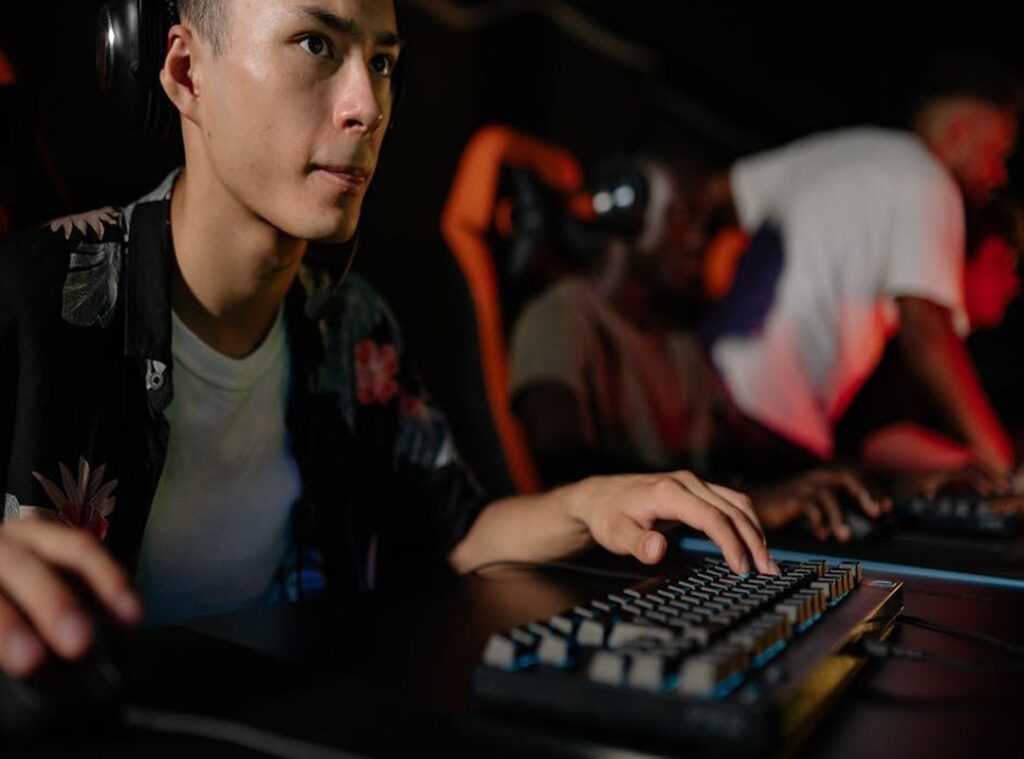

Struggling with CS:GO player movement? You’re not alone. It’s the backbone of any serious player’s plan, but it can feel like a puzzle.
I’ve spent countless hours (maybe too many) mastering this art, and I get it. You want to move like a pro, but sometimes it feels like you’re stuck in mud. So how do you actually get better?
I’ve watched pros, dissected their moves, and even made a few mistakes of my own. Let’s face it, there’s a lot of information out there, but not all of it’s helpful. You need advice you can trust.
This article is going to cut through the noise. We’ll break down what really matters in movement, from strafing to jumping, and how to apply it in real matches. By the end, you’re not just going to understand movement.
You’ll move like you’ve been doing it for years. Ready to level up? Let’s dive in.
Movement Mastery: Stopping on a Dime
Great movement in CS:GO starts with mastering the stop. Ever thought about what happens when you slam the brakes in a race car to take a sharp corner? It’s the same concept with counter-strafing.
You hit the opposite key (A then D or vice versa) to come to an instant halt. This isn’t just about stopping; it’s about stopping with precision. Because in the heat of a match, every millisecond counts.
Let’s talk drills. The Wall Drill is your best friend here. Strafe left with A, tap D, and fire a single shot at a mark on a wall.
Repeat the process strafe right, tap A, and fire. The goal is to nail that perfect pinpoint shot every time. It’s all about muscle memory, so keep practicing until it feels like second nature.
Now, stances. Running is loud, but perfect for rotating when threats are distant. Walking is your silent approach, perfect for sneaking onto a site.
It sacrifices accuracy but keeps you stealthy. Crouching? It’s your go-to for holding tight angles with an accuracy boost, though it turns you into a static target.
Pro tip: Run when enemies are far, walk when breaching a site, and crouch-walk only briefly to peek under obstacles.
Understanding these fundamentals isn’t just theory. It’s what separates the good from the great. Mastering CS:GO player movement is key.
And if you’re into the broader world of plan, learn more about how Dota 2 pros handle team fights and apply those lessons here.
Peeker’s Advantage: Seeing Them First
Ever felt like someone shot you in CS:GO before you even saw them? That’s Peeker’s Advantage. It’s this wild quirk of internet latency that favors the attacker by a split-second.
Kind of like being in the right place at the right time. Or just having faster internet (lucky them).
Let’s talk styles. First up, the Shoulder or Jiggle Peek. This move is like flirting with danger.
You quickly tap A/D to flash a hint of your shoulder and bait a shot. It’s perfect for figuring out if that AWPer is ready to take your head off, without committing to the fight. Honestly, it’s a little like peeking around a corner in real life to see if your annoying neighbor’s still there.
Now, the Wide Swing. This is the big, bold move. You use it when you know where the enemy is and you’re ready to challenge them head-on.
Your speed throws off their aim, and suddenly you’re the one with the upper hand. It’s all about confidence, swagger even. But don’t mess it up.
You’ve got to own it.
Then there’s the Crouch Peek. A mix-up technique that changes your head level to dodge those pre-aimed shots. It’s sneaky, sure, but it makes your escape slower.
If you get caught crouching, you’re in for a world of hurt. Still, in the right scenario, it’s a game-changer.
Here’s the key takeaway: don’t re-peek the same angle the same way twice. Mix it up. Keep them guessing.
Variety is your friend.
Curious about more CS:GO player movement techniques? Check out how to improve your movement. Pro tip: changing your plan keeps the game fresh and unpredictable.
Never let them catch on to your rhythm.
Getting Fancy: Air Strafing and Making Space
Air strafing. If you’ve played CS:GO, you’ve heard of it. It’s about moving mid-air like a boss.

You press A or D and smoothly guide your mouse. Think of it like steering a skateboard in the air. You can’t speed up, but you sure can change where you’re headed.
Now, why does this matter? Making longer jumps is a big deal. Ever tried hitting the gap on Mirage’s window?
Air strafing can get you there. Dodging bullets mid-air is another perk. Imagine jumping past a corner and landing somewhere your enemy didn’t expect.
Talk about an advantage.
But how do you get good at it? Practice, my friend. Find a box.
Jump off, and as you fall, try to air strafe around a corner. It’s fun and you’ll learn a lot. Load up an offline map and mess around with the physics.
Seriously, just play. You’ll thank me later.
And let’s touch on surfing for a second. Ultimate air control. When you know how to slide on angled surfaces, you’re untouchable.
You can escape bad situations or rotate faster on maps like Overpass. It’s not just about showing off (though it sure looks cool).
There’s something about mastering CS:GO player movement that sets you apart. Makes you feel like you’ve got the game figured out. And once you’re maneuvering like a pro, you might find yourself wanting to up your game even more.
Check out some Pro Tactics Fifa Scoring Defense for a little inspiration. It’s all about the edge, right?
So get out there and experiment. Feel the mechanics. Who knows, maybe air strafing will become your favorite move.
After all, in a game like CS:GO, every little advantage counts. And remember, the more you practice, the better you get. Keep strafing.
Keep learning. Keep owning.
Bunny Hopping 101: More Than Just a Cool Trick
Ever seen a player zipping across the map in a game so smoothly, it almost feels like they’re cheating? That’s bunny hopping. At first glance, it might seem like a flashy gimmick, but trust me, it’s a game-changer.
In CS:GO, player movement is everything. And bunny hopping lets you move faster than running while staying silent (stealth mode, anyone?).
Here’s how you dive in. First, bind ‘jump’ to your mouse wheel. No, really, do it.
It’s a game-changer. Then, get some forward momentum going. Jump, and right before landing, scroll your mouse wheel to jump again.
While airborne, hold A and move your mouse left. Then switch to holding D and move right. It’s all about the rhythm, like a dance but with fewer embarrassing moves.
Don’t expect to nail it on your first try. Or your tenth. Bunny hopping is a high-skill, high-reward technique.
But when you finally get it? Pure satisfaction (and your squad will thank you). Think of it as learning to ride a bike.
Awkward at first, but once you get it, you’re unstoppable. Keep practicing. It’s worth it.
Level Up Your Game Instantly
Feeling like an easy target? I’ve been there. But here’s the thing: you don’t have to be.
Mastering CS:GO player movement is your ticket. Those slick counter-strafes and bunny hops? They turn you into a ghost.
So don’t just sit there. Fire up a deathmatch server. Focus on one thing from this guide for just 15 minutes.
Tomorrow, another. That’s how legends are made. Want to stop feeling predictable?
Start moving like a pro right now.
 Head of Esports & Strategy Content
Ask Fredievoids Barnes how they got into esports tournament trends and you'll probably get a longer answer than you expected. The short version: Fredievoids started doing it, got genuinely hooked, and at some point realized they had accumulated enough hard-won knowledge that it would be a waste not to share it. So they started writing.
What makes Fredievoids worth reading is that they skips the obvious stuff. Nobody needs another surface-level take on Esports Tournament Trends, Fundamental Gaming Strategies and Tactics, Game Optimization Cheatsheets. What readers actually want is the nuance — the part that only becomes clear after you've made a few mistakes and figured out why. That's the territory Fredievoids operates in. The writing is direct, occasionally blunt, and always built around what's actually true rather than what sounds good in an article. They has little patience for filler, which means they's pieces tend to be denser with real information than the average post on the same subject.
Fredievoids doesn't write to impress anyone. They writes because they has things to say that they genuinely thinks people should hear. That motivation — basic as it sounds — produces something noticeably different from content written for clicks or word count. Readers pick up on it. The comments on Fredievoids's work tend to reflect that.
Head of Esports & Strategy Content
Ask Fredievoids Barnes how they got into esports tournament trends and you'll probably get a longer answer than you expected. The short version: Fredievoids started doing it, got genuinely hooked, and at some point realized they had accumulated enough hard-won knowledge that it would be a waste not to share it. So they started writing.
What makes Fredievoids worth reading is that they skips the obvious stuff. Nobody needs another surface-level take on Esports Tournament Trends, Fundamental Gaming Strategies and Tactics, Game Optimization Cheatsheets. What readers actually want is the nuance — the part that only becomes clear after you've made a few mistakes and figured out why. That's the territory Fredievoids operates in. The writing is direct, occasionally blunt, and always built around what's actually true rather than what sounds good in an article. They has little patience for filler, which means they's pieces tend to be denser with real information than the average post on the same subject.
Fredievoids doesn't write to impress anyone. They writes because they has things to say that they genuinely thinks people should hear. That motivation — basic as it sounds — produces something noticeably different from content written for clicks or word count. Readers pick up on it. The comments on Fredievoids's work tend to reflect that.